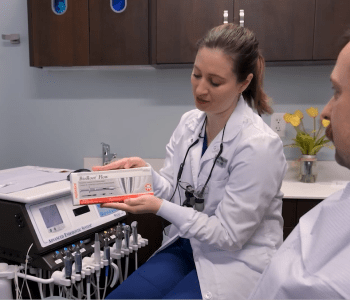
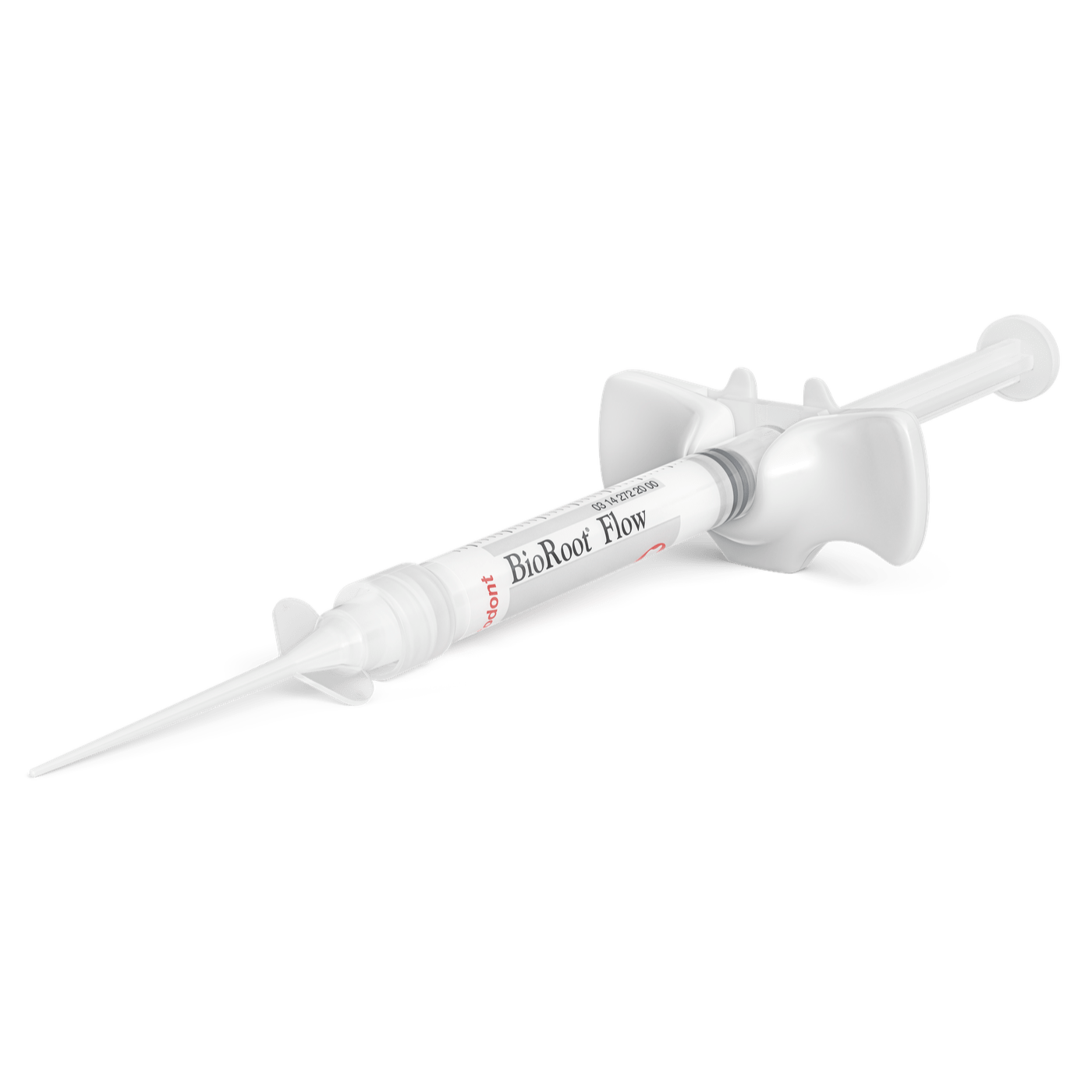
The aim of the study was to evaluate the radiopacity, solubility, flow, film thickness, setting time, and adaptation to the root canal walls of 3 epoxy resin–based sealers: AH Plus, Acroseal, and Adseal.
Download Read moreIADR General Session - Miami, Florida – April 1-4, 2009 (Poster Presentation – Abstract #1006)
A new low shrinkage, universal restorative composite material has been developed (Septodont, Louisville, CO) using a new dimer acid derived monomer as part of the comonomer system and a nanohybrid filler.
"N’Durance’s dimer acid based monomer contributes to a lower volumetric shrinkage, and reduced stress at the bonding area (Bracho-Troconis). Therefore there is less chance for a break in the bond of resin to tooth structure. The nano-technology filler particles such as those particles in N’Durance help make the composite high in wear resistance and fracture strength (Mitra). Though few long term studies exist on resins with nano-fillers, this classification of composite has the potential to retain the advantages and limit the disadvantages of the microfilled or microhybrid composites (LeSage).
N’Durance’s easy handling characteristics add to its appeal. It has good consistency and lacks stickiness which makes placement relatively easy. The author felt that covering the unused portions of the composite was essential as the material will start to cure under room lights.
N’Durance is an excellent clinical choice for anterior restorations, showing high physical and esthetic characteristics. The handling characteristics are good, due to the composite’s smooth consistency and the lack of stickiness."
"Researchers at the University of Colorado investigated and developed a unique monomer chemistry that significantly reduced polymerization shrinkage and increased the initial double bond concentration of the monomer and the degree of conversion achieved during polymerization. (Ge, Lu) They accomplished this by developing a novel diluent monomer based on dimer acid chemistry when compared with conventional diluents and Bis-GMA resins. Recently this dimer chemistry conversion technology was incorporated into a new low-shrink high monomer conversion composite resin, N’Durance (Septodont). The volumetric shrinkage of Bis-GMA nano-hybrid based composites have a range of 1.85-3.00% while the dimer acid chemistry, N’Durance, has a reported polymerization shrinkage of 1.27%. (Bracho-Troconis) High radiopacity and wear resistance are two qualities a composite resin must have. With N’Durance, the use of optimized nano-fillers of Ytterbium Fluoride, Barium glass and silica make this composite easy to distinguish in radiographs and provide for wear resistance similar to existing nano filled composites. (Bracho-Troconis) With this significantly lower volumetric shrinkage and non-stick formulation with N’Durance, well- adapted composite resin restorations are more easily achievable. Side benefits of this new chemistry include extremely low water sorption and solubility which contributes to color stability (no color shifting), marginal integrity and stain resistance of the composite. This same dimer acid high conversion chemistry is used for the N’Durance Dimer Flow flowable composite resin."
Read more"The new technologies are combined in what Septodont calls Nano-Dimer Conversion Technology® in the new universal composite named N’DURANCE®. The major design changes are directed to primarily reducing the polymerization shrinkage. Decreasing shrinkage will decrease the stress on the bonded interface and could increase the prognosis of the bond produced by any of the dentin and enamel bonding agents used by the dentist. While the new resin is extremely biocompatible and the new dimer acid derives from ‘green’ technology, the new technology is compatible with the conventional composites, bonding agents and curing lights. The new composite has physical and mechanical properties that make it an effective restorative for both anterior and posterior restorations."
Read more"N’Durance has high bond strength to tooth structure when used with Clearfil® SE Bond. The mechanical properties of N’Durance are high. The radiopacity is very high."
Read more"Currently, most of the composite resins in the dental market show volumetric shrinkage of 2% to 3.5%. N’Durance demonstrates a shrinkage rate near 1.5%. This may not seem like much of a difference, but clinically this could mean the difference between microleakage and recurrent decay or sensitivity. Also by decreasing the shrinkage, you decrease the stress of the restoration on the tooth itself.
Additionally, this new chemistry has a high monomer conversion. This material, when fully polymerized, will have 75% conversion. Other composite resins on the market have conversion rates that range from 40% to 70%. This higher conversion rate is important because it allows for improvement in the material’s physical properties.
The new chemistry in N’Durance could open the door to the next generation of composite resins, allowing us to provide our patients with stronger, longer lasting esthetic composite restorations.
[…] Septodont’s new chemistry has brought a significant new technology to the field of composite resin science. This new chemistry provides for several physical property improvements that allow us to come closer yet to the ideal composite resin restorative material."
AADR Annual Meeting - Dallas, Texas - April 2-5, 2008 (Oral presentation- Program #081)
A new "Low Shrinkage Nano-Hybrid Composite" (LSNHC) was developed using a free radically polymerizable dimer acid dimethacrylate which copolymerizes with existing monomers and a filler system which contains a new Ytterbium Fluoride mono dispersed nano sized particles, combined with regular Silica and Barium glass, to obtain dental composites. This composite compensates for shrinkage by phase separation.
IADR General Session – Toronto - July 2-5, 2008 (Oral presentation – Abstract #1812)
Several approaches to improved dental composites have been studied. One of these approaches is to increase the biocompatibility by increasing the monomer conversion and thereby reducing the elution of components. Great strides have been made, but manufacturers battle the problem of an increase in shrinkage contraction and stress when the monomer conversion increases.
IADR/AADR/CADRE 85th General Session – New Orleans - March 21-24, 2007 (Oral presentation – Program #1290)
A new "Low Shrinkage Microhybrid Composite (LSMHC)" was developed using a free radically polymerizable dimer acid based resin, designed at the University of Colorado, USA, which compensates for shrinkage by phase separation. The new dimer acid derived dimethacrylate readily copolymerizes with existing monomers to obtain dental composites using standard initiating systems.
"The definitive N’Durance restoration represented a significant aesthetic improvement over the previous resin restoration and returned the patient to a healthy oral state."
Read more